
































48V UL 1973 Lithium Battery for Telecom Backup and ESS
What Is a 48V UL 1973 Lithium Battery?
A 48V UL 1973 Lithium Battery complies with UL 1973, the safety standard governing stationary batteries used in telecom systems, commercial energy storage systems (ESS), renewable energy storage arrays, and industrial infrastructure applications.
UL 1973 certification evaluates:
- Electrical safety under normal and abnormal operating conditions
- Mechanical construction and enclosure integrity
- Environmental durability and temperature tolerance
- Battery management system (BMS) protection performance
When buyers search for a UL listed 48V lithium battery, they are typically referring to compliance with UL 1973 for stationary applications rather than mobile or automotive use.
Why a 48V UL 1973 Lithium Battery Is Critical in Telecom Projects
Telecom backup systems operate in mission-critical environments where downtime can impact communications networks and infrastructure services. Because of this, regulatory bodies and project consultants often require documented third-party certification.
Choosing a 48V UL 1973 Lithium Battery supports:
- Specification compliance in regulated markets
- Faster inspection and AHJ approval
- Insurance acceptance and documentation validation
- Reduced engineering review complexity
Many telecom operators now explicitly require a 48V UL 1973 Lithium Battery in procurement specifications for new installations, expansions, and retrofit upgrades.

Understanding UL 9540A Testing for Fire Propagation
In addition to UL 1973 product certification, UL 9540A testing evaluates thermal runaway behavior and fire propagation characteristics within energy storage systems.
This testing method measures:
- Thermal containment performance
- External flame spread
- Heat release rate
- Impact on adjacent battery units
While UL 1973 certifies the battery product itself, UL 9540A provides system-level data that supports indoor installation planning and regulatory review for commercial energy storage deployments.
Technical Considerations When Selecting a 48V UL 1973 Lithium Battery
Voltage Class Compatibility
Most 48V stationary lithium systems operate at 51.2V nominal. Compatibility with rectifiers, inverters, and DC distribution equipment must be verified before installation.
Energy Capacity and Expansion
A 48V 100Ah configuration typically delivers approximately 5kWh of usable energy storage. Parallel scalability is essential for telecom racks and modular ESS deployments requiring higher capacity.
Temperature Performance
Cold-climate installations benefit from integrated heating technology or controlled charging logic to prevent low-temperature charging stress and lithium plating risks.
Protection and Monitoring
A properly engineered 48V UL 1973 Lithium Battery incorporates advanced BMS protections, including over-charge, over-discharge, short circuit, and thermal safeguards appropriate for stationary infrastructure environments.
Certified 48V 100Ah Example Platform
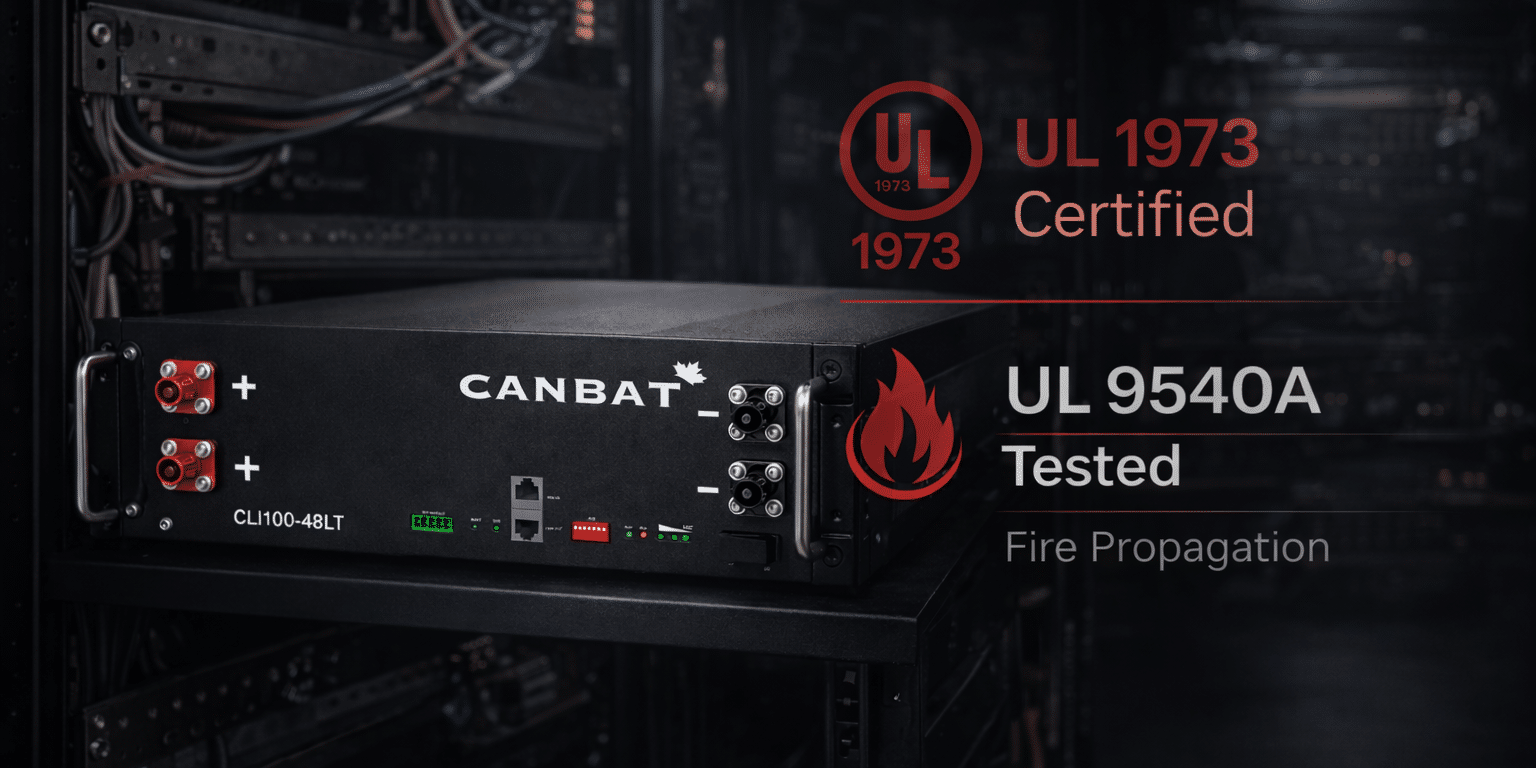
The CLI100-48LT 48V UL 1973 Lithium Battery is ETL Listed to ANSI/CAN/UL 1973 and evaluated under UL 9540A fire propagation testing protocols.
This 48V UL 1973 Lithium Battery platform is engineered specifically for telecom backup systems, commercial ESS installations, and industrial stationary energy storage environments requiring documented certification.
- 51.2V nominal voltage (48V class)
- 100Ah capacity (5.12kWh)
- Integrated cold-climate charging support
- Parallel expansion capability
- Rack, wall, stack, or floor mounting flexibility
Verification and Compliance Documentation
When specifying a 48V UL 1973 Lithium Battery, confirm that certification is issued by an accredited NRTL and that listing documentation corresponds to the exact model number being installed.
Additional information regarding certification standards can be reviewed on the
UL official website.
Selecting a compliant 48V UL 1973 Lithium Battery supports regulatory alignment, simplifies inspection approval processes, and strengthens long-term infrastructure reliability across telecom and commercial energy storage applications.