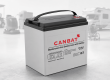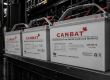
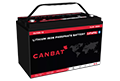
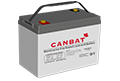
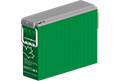


























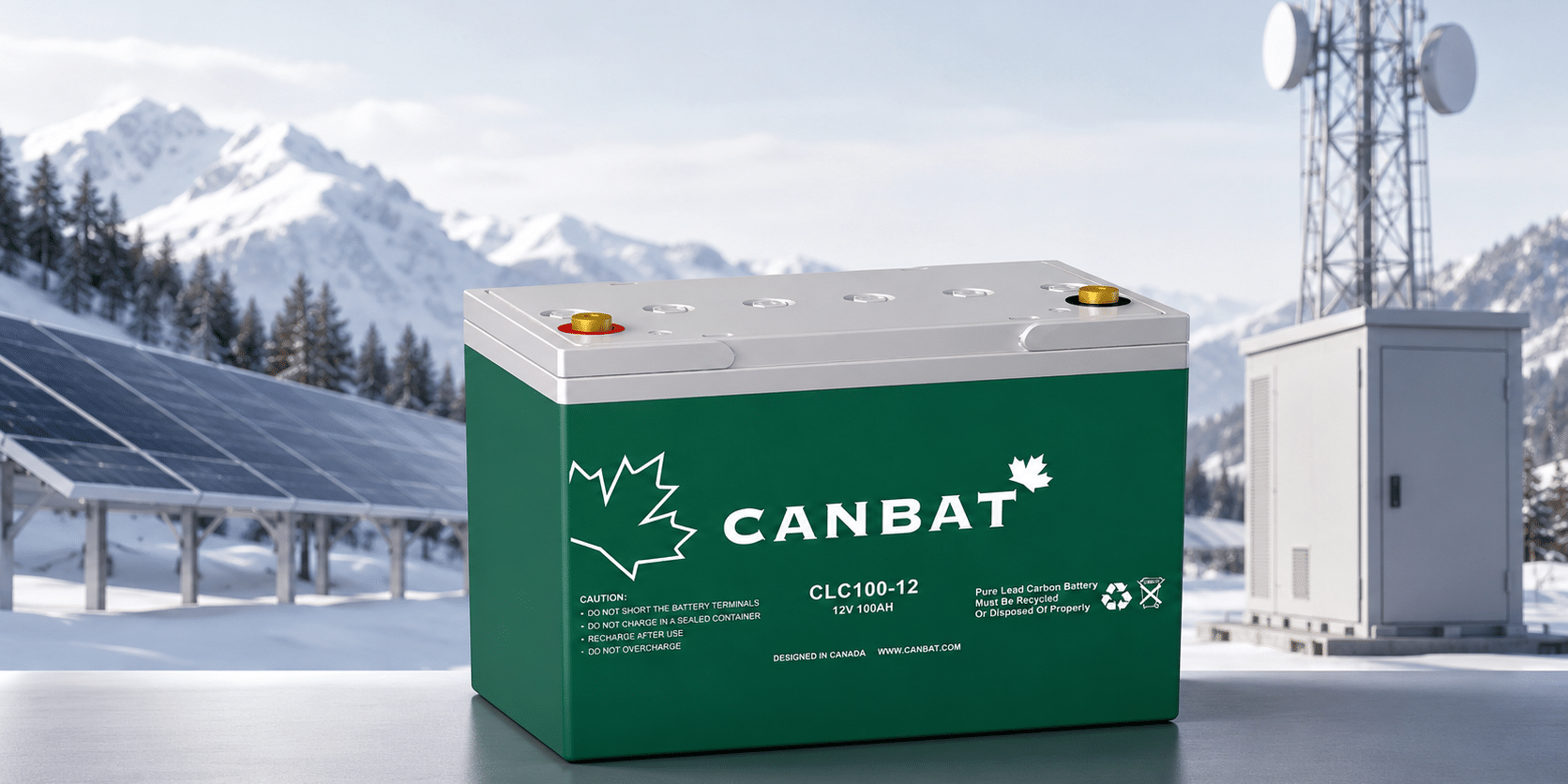
What is a lead carbon battery? A lead carbon battery is a premium heavy-duty VRLA battery designed for demanding stationary energy-storage applications where standard AGM batteries can fall short. For buyers specifying batteries for solar, telecom, remote power, outdoor cabinets, or hybrid inverter and genset systems, the main advantages are longer cycle life, superior partial-state-of-charge performance, deeper discharge capability, and wide operating temperature suitability for Canadian operating conditions. Lead carbon sits between standard AGM and lithium — not the lowest-cost or lightest option, but frequently the right specification when cycling performance, service life, and VRLA integration simplicity matter more than weight or upfront price.
This guide is written for engineers, installers, and procurement teams who are specifying batteries for real systems. It explains where lead carbon outperforms standard AGM, when lithium is still the better call, how to choose between top-terminal and front-terminal configurations, and which Canbat CLC model fits your application.
By the end, you should be able to decide whether lead carbon is the correct specification for your project — and which model to shortlist.
What Is a Lead Carbon Battery?
To answer the core question directly — what is a lead carbon battery? It is a valve-regulated lead-acid (VRLA) battery that incorporates a carbon-enhanced negative plate. The carbon additive is engineered into the negative active material to improve charge acceptance and help reduce sulfation under partial-state-of-charge operation — the conditions that shorten standard AGM life in solar, telecom, and off-grid systems.
Mechanically and electrically, a lead carbon battery installs and behaves like a familiar VRLA AGM battery. It uses the same nominal 12V architecture, the same sealed valve-regulated construction, and the same family of charging algorithms — which is what makes it straightforward to specify into existing lead-acid infrastructure. What changes is how the negative plate behaves when the battery is repeatedly discharged and recharged without ever returning fully to 100% state of charge, which is exactly the operating profile that defines solar, telecom, and most off-grid energy storage.
The Four Main Advantages of Lead Carbon Batteries
For buyers comparing lead carbon against standard AGM, four advantages drive the specification decision — in roughly this order of importance for most stationary energy-storage projects. Canbat CLC lead carbon batteries are also UL 1989 certified, supporting their use in commercial, industrial, telecom, and stationary backup power applications where recognized battery certification matters.
1. Longer Cycle Life
Lead carbon is engineered for stronger cycling performance and longer service life than standard AGM in demanding cycling applications. For systems that cycle daily or near-daily, the higher cycle count translates directly into reduced replacement frequency and lower lifetime cost of ownership — the metric most buyers and specifiers weigh most heavily.
2. Superior Partial-State-of-Charge Performance
Partial-state-of-charge (PSoC) operation is the reality of most real-world energy-storage systems:
- Solar production varies day-to-day with weather, season, and shading. A battery bank may not return to full state of charge for days at a time.
- Telecom and remote power sites cycle on grid outages or scheduled load events, then recharge whenever conditions allow.
- Hybrid inverter and genset systems run the generator only for limited windows, leaving the battery to absorb whatever charge is available.
- Microgrids and renewable energy battery banks balance load and supply continuously, with the battery rarely sitting at a true full charge.
In a conventional AGM battery, this duty cycle allows lead sulfate to harden on the negative plate, reducing capacity and shortening life. The carbon-enhanced negative plate in a lead carbon battery helps reduce sulfation and maintains stronger charge acceptance when the battery is not fully recharged between cycles — which is why it holds up where standard AGM degrades.
3. Deeper Discharge Capability
Canbat CLC lead carbon batteries can support deeper discharge profiles, up to 80% DoD where system design allows. This gives system designers more usable headroom per battery in cycling applications than typical standard AGM discharge recommendations, where supported by the individual product datasheet.
4. Wide Operating Temperature Suitability
Canbat CLC lead carbon batteries offer a wide operating temperature range suited to Canadian telecom sites, outdoor cabinets, remote power systems, and seasonal off-grid installations. This makes them a strong fit for Canadian stationary energy-storage applications exposed to demanding environmental conditions. Charging and operating limits should always be confirmed against the product datasheet and system design.
Lead Carbon vs AGM: When Does It Justify the Cost?
Lead carbon is a premium heavy-duty VRLA upgrade over standard AGM for demanding cycling and stationary energy-storage applications. Its advantage is strongest where longer cycle life, better charge acceptance, deeper discharge capability, and partial-state-of-charge tolerance matter — but standard AGM batteries still have their place in low-cost standby service.
The decision rule: if the system cycles frequently, discharges deeply, or operates in partial-state-of-charge conditions, lead carbon usually delivers a clear performance advantage over standard AGM, and the higher upfront cost can be recovered through reduced replacement frequency. For simple standby with rare discharge, standard AGM may still be the more cost-effective specification.
Lead Carbon vs Lithium: When Is Lithium Still Better?
Lead carbon and lithium are different tools for different jobs. Specifying the wrong one wastes budget in both directions.
Choose Lithium When
- Weight and compact size are the binding constraints — mobile or space-restricted installations
- Maximum usable capacity and energy density drive the system architecture
- The system is designed around lithium BMS communication, CAN-bus, or cell-level data
- High cycle counts at high depth of discharge are required daily
Choose Lead Carbon When
- The application is stationary and weight is not the main constraint
- You want to integrate into legacy lead-acid charging infrastructure without redesign
- A BMS-free design is preferred for cell-level simplicity and reliability
- A familiar VRLA safety profile matters — lead carbon does not carry the same thermal runaway profile associated with lithium-ion energy storage systems
- Simpler shipping, handling, and decommissioning classification is an advantage in your jurisdiction
For weight-sensitive and high-energy-density applications, lithium batteries are the better specification. For stationary energy storage where integration simplicity, charging compatibility, and VRLA safety matter more than weight, lead carbon is frequently the better commercial decision.
Which Applications Is Lead Carbon Specified Into?
Canbat CLC lead carbon batteries are specified into:
- Off-grid solar energy storage — residential, commercial, and remote site installations
- Renewable energy battery banks — hybrid solar, wind, and small hydro systems
- Telecom backup — cell sites, microwave repeaters, and communication shelters
- Remote power sites — monitoring stations, environmental sensors, and unattended infrastructure
- Hybrid inverter and genset systems — where the generator provides intermittent charging
- Microgrids — community, industrial, and campus-scale energy storage
- Utility substation and switchgear control power — where the application supports cycling duty
- Stationary backup systems with frequent cycling
- Remote cabins and seasonal installations — where the battery cycles deeply and recharges from solar
- Industrial PSoC cycling applications — buffer storage, load levelling, and renewable smoothing
Large RV and marine house banks with frequent solar charging and deep cycling can also be appropriate, but they are not the primary use case. For recreational and mobile deep-cycle service, a purpose-built deep-cycle AGM is usually the more cost-effective specification.
Top-Terminal vs Front-Terminal: Which Should You Specify?
Canbat offers lead carbon batteries in two terminal configurations. The right one depends on how the battery will be installed and serviced.
Specify Top-Terminal When
The battery will be installed in open battery rooms, shelved enclosures, or floor-mounted banks where top access is straightforward. Top-terminal models suit general stationary energy storage, off-grid solar, renewable energy battery banks, remote power systems, and hybrid inverter and genset installations.
Specify Front-Terminal When
The battery will be installed in a rack or cabinet where front-access serviceability is a design priority. Front-terminal models suit telecom backup, rack-mounted energy storage, communication power systems, remote power cabinets, UPS backup systems, utility substations, and switchgear control power. Front-access terminals simplify cable connection, inspection, voltage checks, and torque checks in tight enclosures.
Before specifying a front-terminal model: verify enclosure dimensions, shelf weight rating, cable clearance, and terminal orientation against the product datasheet. Front-terminal fitment depends on the specific rack or cabinet design and should always be confirmed before purchase.
Should You Choose a Lead Carbon Battery?
Use this as a quick specification check before shortlisting a model.
Choose Lead Carbon When
- Long cycle life matters
- Frequent cycling is expected
- Deeper discharge is expected
- Recharge is irregular or incomplete
- Partial-state-of-charge operation may occur
- Solar, wind, genset, or hybrid charging is involved
- Canadian cold-weather or outdoor cabinet operation is expected
- Service visits and replacement frequency need to be reduced
- VRLA simplicity and BMS-free integration are preferred
- The application is stationary and weight is not the main constraint
Consider AGM When
- The application is mostly standby
- Discharge is rare
- Lowest upfront cost matters most
Consider Lithium When
- Weight and compact size matter most
- The system is designed around lithium BMS communication
- Maximum usable capacity and energy density are the top priorities
Canbat CLC Lead Carbon Models by Use Case
Once you understand what a lead carbon battery is and where it fits, the next step is choosing the right capacity and terminal configuration. Canbat manufactures a focused CLC lead carbon lineup covering both top-terminal and front-terminal configurations. Every CLC model is UL 1989 certified and engineered for demanding stationary energy-storage applications requiring long cycle life, deeper discharge capability, and strong partial-state-of-charge performance.
Top-Terminal Models
Front-Terminal Models
Note on float life vs cycle life: the 20+ year design floating life applies to standby and telecom-style applications where the battery sits at float voltage and discharges infrequently. Cycle life in daily PSoC service depends on depth of discharge, charge profile, temperature, and operating conditions, and should be evaluated against the relevant product datasheet for the specific duty cycle.
Information to Have Ready Before You Specify
To get the most accurate model recommendation and avoid specifying the wrong battery, define the following before selecting a model:
- System voltage and required Ah capacity
- Required runtime and average daily load
- Charging source — solar, genset, grid, or hybrid
- Whether the battery will operate in float standby or daily cycling service
- Available installation space and environment
- For rack or cabinet systems: enclosure dimensions, shelf rating, cable clearance, and terminal orientation
These details determine whether lead carbon, AGM, or lithium is the correct specification, and which model and terminal configuration to choose.
Conclusion
Lead carbon is the right specification when standard AGM struggles — under partial-state-of-charge operation, irregular recharge, and repeated daily cycling in stationary energy-storage systems. It preserves the safety profile, charging compatibility, and integration simplicity of VRLA technology while delivering materially longer cycle life in renewable, telecom, and remote power applications. It is not the lowest-cost or lightest option, and for simple standby or weight-critical systems, AGM or lithium will be the better call.
If your application requires long cycle life, frequent cycling, deeper discharge, irregular recharge, partial-state-of-charge tolerance, or operation in demanding Canadian environments, browse Canbat CLC lead carbon battery models to compare capacity and terminal configurations, or view the lead carbon battery overview to match the right model to your system.
Frequently Asked Questions
What is a lead carbon battery?
What is a lead carbon battery in practical terms? It is a valve-regulated lead-acid (VRLA) battery that uses a carbon-enhanced negative plate to improve charge acceptance and help reduce sulfation. It is specified for demanding stationary energy-storage applications that require longer cycle life, deeper discharge capability, stronger charge acceptance, and better partial-state-of-charge performance than standard AGM, including off-grid solar, telecom backup, remote power, and outdoor cabinet systems.
What are the main advantages of lead carbon batteries?
The main advantages are longer cycle life, superior partial-state-of-charge performance, deeper discharge capability, and wide operating temperature suitability for demanding stationary energy-storage applications. These benefits make lead carbon a strong fit for solar, telecom backup, remote power, outdoor cabinet, hybrid inverter and genset, and other cycling applications where standard AGM may not provide the required service life.
When does lead carbon justify the cost over AGM?
Lead carbon justifies its higher upfront cost when the system cycles frequently, discharges deeply, recharges irregularly, or operates in partial-state-of-charge conditions. In these applications, lead carbon can deliver significantly longer service life than standard AGM, helping offset the higher upfront cost through fewer replacements. For simple standby applications with rare discharge, standard AGM remains more cost-effective.
Is lead carbon or lithium better for my system?
Lithium is better when weight, compact size, or maximum usable capacity drive the design, or when the system is built around lithium BMS communication. Lead carbon is better for stationary systems where integration into legacy lead-acid charging, BMS-free simplicity, and a familiar VRLA safety profile matter more than weight. Lead carbon does not carry the same thermal runaway profile associated with lithium-ion energy storage.
Are lead carbon batteries good for solar energy storage?
Yes. Lead carbon is engineered for the partial-state-of-charge cycling and irregular recharge that define solar energy storage. It is better suited than standard AGM to inconsistent solar input and deeper cycling, which makes it a strong fit for off-grid solar, hybrid solar systems, and renewable energy battery banks.
Should I choose a top-terminal or front-terminal lead carbon battery?
Choose top-terminal for open battery rooms, shelved enclosures, and floor-mounted banks in off-grid solar and general stationary storage. Choose front-terminal for telecom, rack-mounted, and cabinet installations where front-access serviceability is required. For front-terminal models, verify enclosure dimensions, shelf rating, cable clearance, and terminal orientation against the datasheet before purchase.
Are lead carbon batteries good for Canadian cold weather?
Canbat CLC lead carbon batteries are designed for demanding stationary energy-storage environments and offer a wide operating temperature range suited to Canadian telecom, remote power, outdoor cabinet, and off-grid applications. Charging and operating limits should always be confirmed against the product datasheet and system design.
How long do lead carbon batteries last?
Canbat CLC lead carbon batteries offer 20+ year design floating life at 20°C and 2,500+ cycles at 50% depth of discharge where supported by individual product datasheets. Float life applies to standby and telecom-style applications; cycle life in daily cycling service depends on depth of discharge, charge profile, temperature, and operating conditions.