






















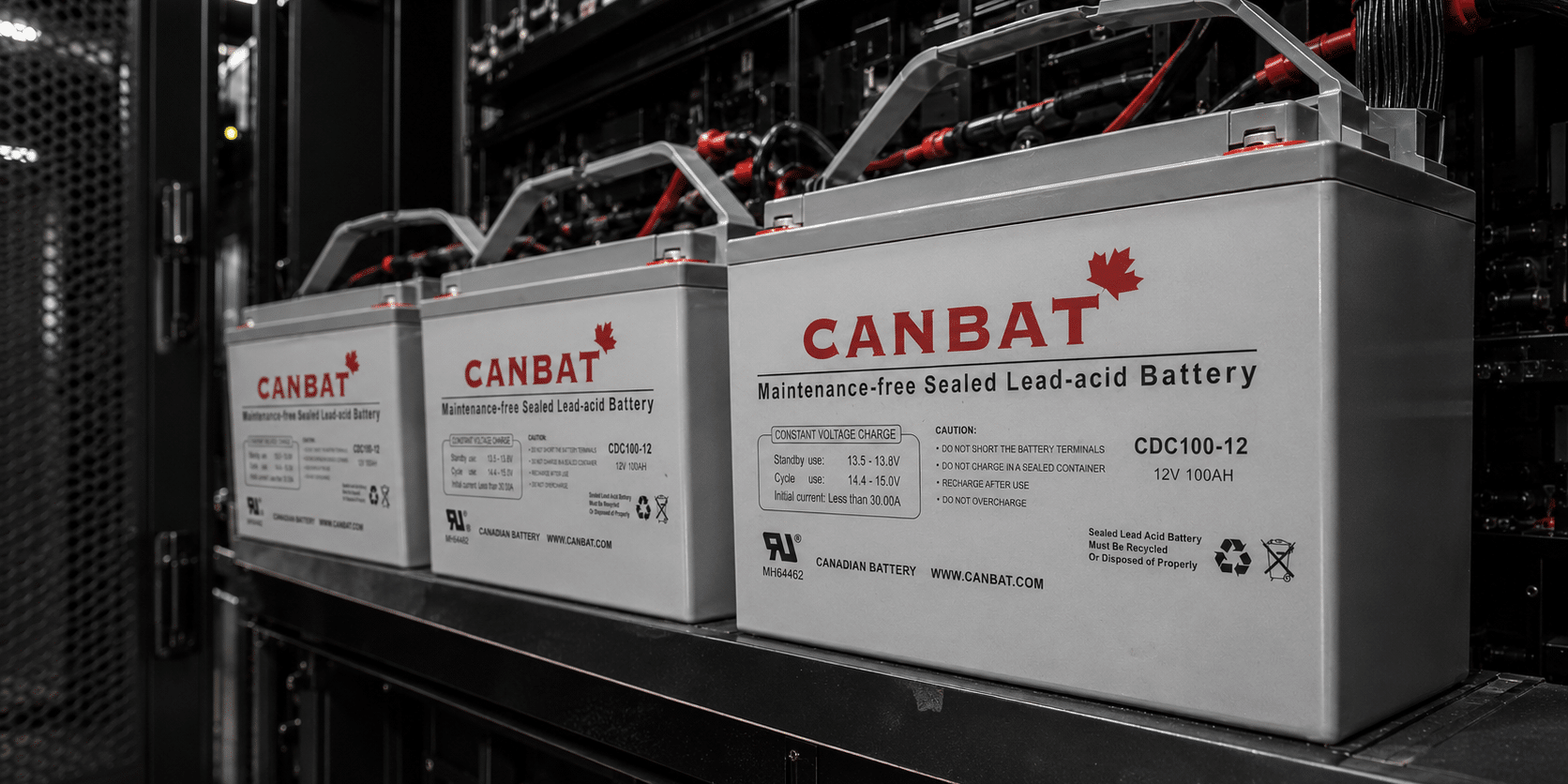
UL 1989 certified batteries are commonly specified for telecom, UPS, and industrial backup power projects — yet the certification itself is rarely explained clearly to the buyers and engineers responsible for sourcing them.
When specifying batteries for a critical power application — whether for a telecom installation, a UPS system, or an industrial backup power project — one question comes up consistently in procurement: Is the battery certified?
Third-party certification is not just a checkbox. In many commercial and industrial projects, certification status can directly impact vendor approval, project sign-off, and procurement timelines. It is one of the most reliable signals that a product has been independently evaluated against a defined safety and performance standard. For lead-acid batteries used in stationary standby and backup power applications, UL 1989 is that standard.
This article explains what UL 1989 covers, why it matters to buyers and specifiers, and what to look for when sourcing certified batteries for your next project.
In This Article
- What Is UL 1989?
- What Does UL 1989 Actually Test?
- Why Certification Matters for Procurement
- Applications That Commonly Require UL 1989 Certified Batteries
- UL Recognized Component vs. UL Listed
- What to Look for in a UL 1989 Certified Battery Supplier
- UL 1989 and Canadian Projects
- Canbat’s UL 1989 Certification
- Frequently Asked Questions
What Is UL 1989?
UL 1989 is the Standard for Safety for Valve Regulated or Vented Batteries with Aqueous Electrolytes, published by UL Solutions. It establishes the component-level safety requirements for sealed lead-acid batteries — including Valve Regulated Lead-Acid (VRLA) batteries, Absorbent Glass Mat (AGM) batteries, and gel-cell types — used in a wide range of stationary standby and backup power applications.
The standard covers batteries intended for use in stationary power applications. It evaluates the battery as a component typically installed within a larger system — such as a UPS unit, telecommunications cabinet, or emergency lighting panel — and submitted as part of that equipment for broader safety evaluation.
UL 1989 is maintained and administered by UL Solutions and is widely recognized across North American markets. Batteries evaluated to this standard are classified as UL Recognized Components — meaning they have been independently tested and meet defined safety requirements at the component level.
What Does UL 1989 Actually Test?
UL 1989 evaluates lead-acid batteries across a comprehensive set of safety criteria. While the full standard is technical in scope, the key areas of evaluation include:
- Electrical safety — overcharge, short circuit, and abnormal charging conditions
- Mechanical integrity — construction, terminal strength, and case durability
- Thermal performance — behavior under elevated temperature conditions
- Venting and pressure relief — proper function of pressure release mechanisms
- Electrolyte containment — preventing leakage under defined stress conditions
- Labelling requirements — ensuring products carry accurate and complete identification
These evaluations are conducted on representative product samples by UL Solutions engineers. Certification is not self-declared — it requires independent laboratory testing and ongoing follow-up services to maintain the certification in good standing.
Why Certification Matters for Procurement
For B2B buyers, project managers, and procurement teams, UL 1989 certification carries practical weight in several important ways.
Project and tender compliance
Many commercial, industrial, and government projects specify UL Recognized or UL Listed components as a baseline requirement. A battery that has not been evaluated to UL 1989 may not qualify for inclusion in a bid — regardless of its price or delivery timeline. Verifying certification status before supplier selection avoids project delays and re-specification costs.
Approved vendor and equipment lists
System integrators and OEM manufacturers often maintain approved component lists for recurring projects. Sourcing from a supplier whose batteries carry UL 1989 certification simplifies the approval process and reduces the documentation burden during equipment qualification.
Third-party verification
Certification means an independent body — not the manufacturer — has validated the product against a published standard. This provides procurement teams with a defensible basis for supplier selection and reduces reliance on manufacturer-supplied test data alone.
Long-term reliability confidence
UL certification is not a one-time event. Certified products are subject to ongoing factory inspections and follow-up surveillance by UL Solutions to verify continued compliance. This ongoing oversight supports confidence in product consistency over time.
Applications That Commonly Require UL 1989 Certified Batteries
UL 1989 certified batteries appear across a broad range of industries and applications where standby and backup power reliability is critical:
- Telecommunications — central office battery strings, remote site backup, tower power (view OPzV batteries)
- UPS systems — single-phase and three-phase uninterruptible power supplies for IT and industrial loads (view high-rate batteries)
- Security and alarm systems — intrusion detection, access control, and fire alarm panels
- Emergency lighting — exit and egress lighting systems in commercial and institutional buildings
- Industrial backup power — process control systems, SCADA, and facility power backup
- Medical equipment — battery-backed devices and portable medical power systems
- OEM integration — equipment manufacturers embedding batteries into certified end products
Across these sectors, procurement specifications frequently reference UL standards either directly or through broader compliance requirements such as building codes, insurance conditions, or end-customer procurement policies.
UL Recognized Component vs. UL Listed: What Is the Difference?
UL Recognized Component is the correct classification for a battery evaluated under UL 1989. This is distinct from UL Listed, which applies to complete, standalone products. Because batteries under UL 1989 are evaluated as components intended for installation within a larger certified system, the Recognized Component Mark is the appropriate and expected certification status.
It is also worth noting that UL 1989 applies specifically to lead-acid batteries with aqueous electrolytes. Lithium-based batteries are evaluated under different UL standards and are not covered by UL 1989.
What to Look for in a UL 1989 Certified Battery Supplier
Certification alone does not fully define supplier quality. When evaluating suppliers who claim UL 1989 compliance, consider the following:
- Certificate scope — does the certificate cover the specific model you are sourcing, or only selected SKUs within a broader product line?
- Certificate currency — is the certification active and up to date? UL certifications can be suspended or withdrawn. Verify directly through the UL Online Certifications Directory.
- Documentation availability — can the supplier provide the certificate, report reference number, and supporting product documentation promptly for tender or procurement submissions? (view Canbat’s certification documentation)
- Product range depth — a certification covering a broad product range signals a more mature compliance program and reduces the risk of future sourcing gaps if your requirements change.
- Ongoing surveillance — ask whether the supplier’s manufacturing facilities are subject to UL follow-up factory inspections. This is a requirement of maintained certification.
UL 1989 and Canadian Projects
UL standards are widely recognized throughout North American commercial and industrial markets, and UL 1989 is no exception. Canadian project specifications — particularly in telecommunications infrastructure, commercial building systems, and industrial backup power — frequently reference UL Recognized components as an accepted or preferred certification basis.
For Canadian procurement teams, a UL 1989 Certificate of Compliance issued to a Canadian company and covering specific product models provides a directly usable compliance document for tender submissions, equipment approval packages, and approved vendor applications. It complements other documentation requirements and can be provided alongside relevant product datasheets and test reports as part of a complete technical submittal.
Buyers working within Canadian Authority Having Jurisdiction (AHJ) requirements should confirm the specific certification standards referenced in their project specifications, as requirements can vary by province, application, and project type. Canbat’s team can assist with documentation tailored to specific project needs.
Canbat’s UL 1989 Certification
Canbat Technologies holds an active UL 1989 Certificate of Compliance covering a broad range of sealed lead-acid battery models evaluated as sealed cell, lead-acid batteries with pressure release vents under UL 1989 requirements.
Report Ref. MH68311-20260513
Issued May 13, 2026
Standard UL 1989
Issuer UL Solutions
The certification covers models across Canbat’s CBL, CBG, CDC, CHR, CHT, CLC, CZV, and CHTF series — spanning both 12V and 2V configurations used in stationary standby and backup power applications.
The certification supports Canbat’s continued focus on supplying compliant backup power solutions for telecom, UPS, security, emergency lighting, and industrial standby applications across North America. The UL 1989 Certificate of Compliance is available for reference in project submittals, tender documentation, and approved vendor applications. View Canbat’s UL 1989 Certificate of Compliance.
Need compliance documentation for a project or tender? Canbat can provide the UL 1989 Certificate of Compliance, report reference, and supporting product specifications for any covered model — promptly and at no charge.
Frequently Asked Questions
What is UL 1989?
UL 1989 is the UL Standard for Safety for Valve Regulated or Vented Batteries with Aqueous Electrolytes. It defines the component-level safety requirements for sealed lead-acid batteries — including VRLA and AGM types — used in stationary standby and backup power applications across North American markets. Batteries evaluated to this standard are classified as UL Recognized Components.
Are UL 1989 certified batteries required for telecom and UPS applications?
Many telecom operators, UPS integrators, and system OEMs specify UL Recognized or UL certified components as part of their procurement requirements or equipment approval processes. While regulatory mandates vary by jurisdiction and application, UL 1989 certification is widely expected by buyers in these sectors and is frequently referenced in project specifications and tender documents.
What is the difference between UL Listed and UL Recognized?
UL Listed applies to complete, standalone products. UL Recognized Component applies to components — including batteries under UL 1989 — that are intended for installation within a larger system. Batteries evaluated under UL 1989 carry the UL Recognized Component Mark (UR), not the UL Listed Mark. Both are valid certifications; the correct classification depends on how the product is used.
Does UL 1989 apply to lithium batteries?
No. UL 1989 applies specifically to lead-acid batteries with aqueous electrolytes, including VRLA, AGM, and gel types. Lithium-based batteries — including LiFePO4 and other lithium chemistries — are evaluated under different UL standards such as UL 1642 (cells) or UL 9540 (energy storage systems). If you are sourcing lithium batteries, confirm the applicable certification separately.
What applications use UL 1989 certified batteries?
UL 1989 certified batteries are used across a wide range of stationary standby and backup power applications, including telecommunications, UPS systems, security and alarm panels, emergency lighting, industrial backup power, medical equipment, and OEM-integrated systems.
How can I verify that a battery is UL 1989 certified?
Certification can be verified through UL Online Certifications Directory at iq.ulprospector.com. Search by company name, certificate number, or product model. Only products actively listed in this directory and bearing the UL Recognized Component Mark should be considered certified under UL’s Follow-Up Services program. Canbat’s certification can be found under certificate number MH68311.
Why does battery certification matter for procurement?
Third-party certification provides an independent verification that a product has been tested and meets defined safety standards — not just manufacturer claims. For procurement teams, this supports defensible supplier selection, simplifies project compliance documentation, and reduces risk associated with uncertified components in critical power systems.